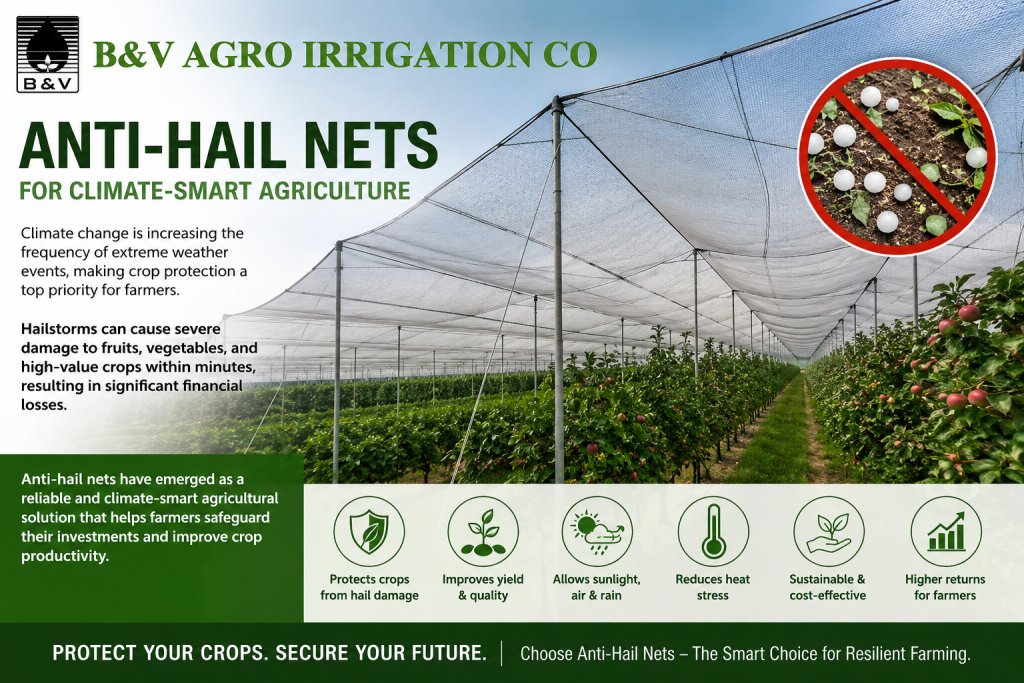
Climate change is increasing the frequency of extreme weather events, making crop protection a top priority for farmers. Hailstorms can cause severe damage to fruits, vegetables, and high-value crops within minutes, resulting in significant financial losses. Anti-hail nets have emerged as a reliable and climate-smart agricultural solution that helps farmers safeguard their investments and improve crop productivity.
Why Anti-Hail Nets Are Important for Modern Agriculture
With unpredictable weather patterns becoming more common, farmers need sustainable solutions to minimize crop damage. Anti-hail net systems provide year-round protection and help create a safer growing environment for crops.
Key Benefits of Anti-Hail Nets
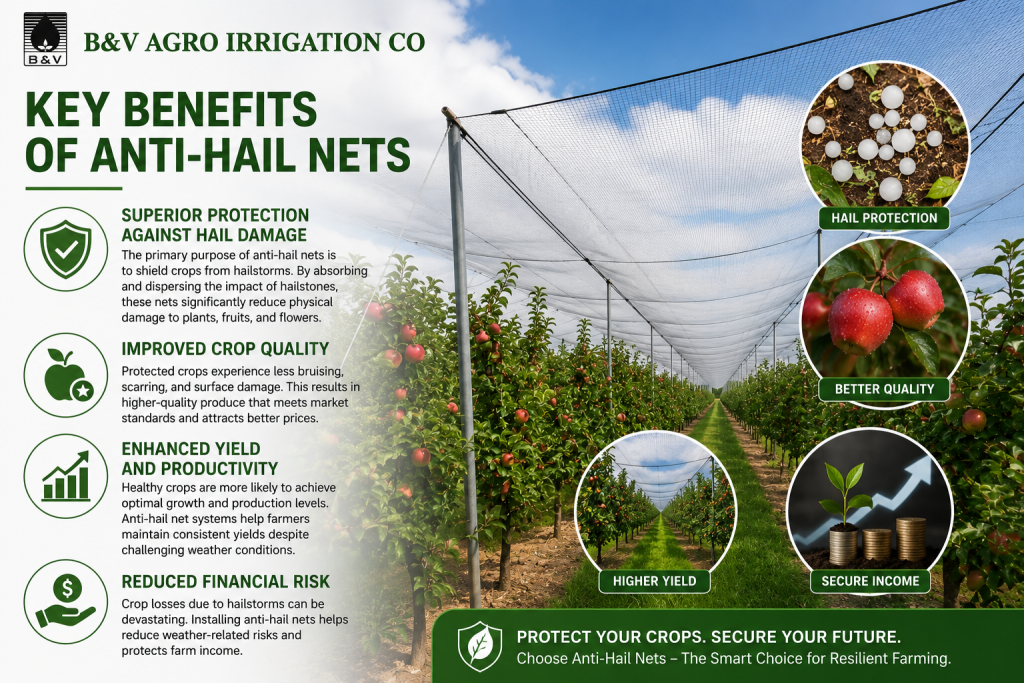
Superior Protection Against Hail Damage
The primary purpose of anti-hail nets is to shield crops from hailstorms. By absorbing and dispersing the impact of hailstones, these nets significantly reduce physical damage to plants, fruits, and flowers.
Improved Crop Quality
Protected crops experience less bruising, scarring, and surface damage. This results in higher-quality produce that meets market standards and attracts better prices.
Enhanced Yield and Productivity
Healthy crops are more likely to achieve optimal growth and production levels. Anti-hail net systems help farmers maintain consistent yields despite challenging weather conditions.
Reduced Financial Risk
Crop losses due to hailstorms can be devastating. Installing anti-hail nets helps reduce weather-related risks and protects farm income.
Applications of Anti-Hail Nets
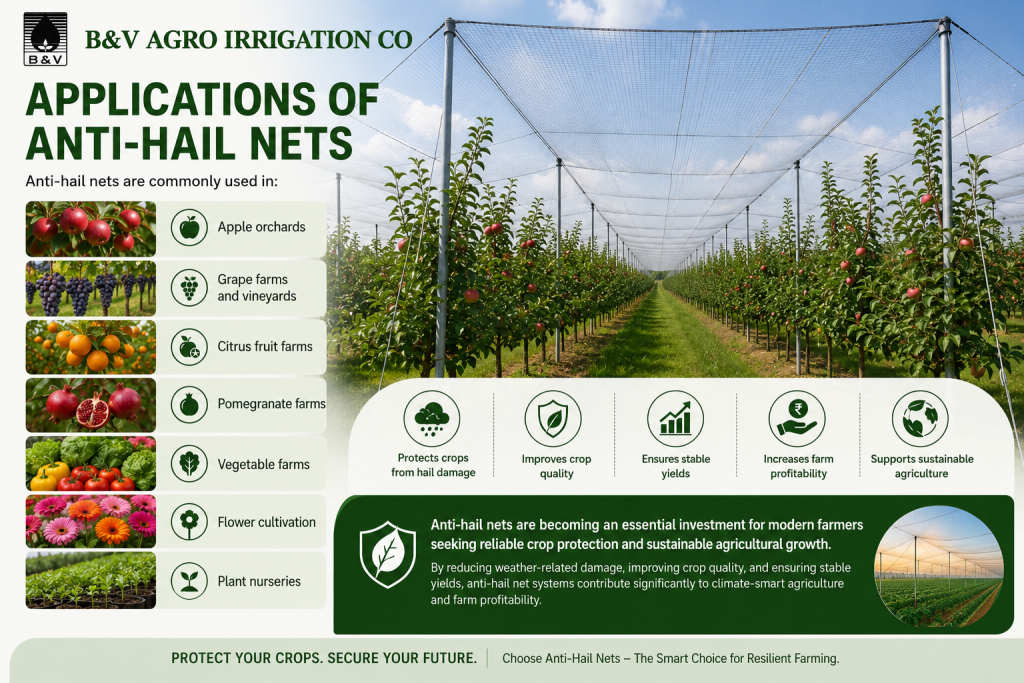
Anti-hail nets are commonly used in:
- Apple orchards
- Grape farms and vineyards
- Citrus fruit farms
- Pomegranate farms
- Vegetable farms
- Flower cultivation
- Plant nurseries
Anti-hail nets are becoming an essential investment for modern farmers seeking reliable crop protection and sustainable agricultural growth. By reducing weather-related damage, improving crop quality, and ensuring stable yields, anti-hail net systems contribute significantly to climate-smart agriculture and farm profitability.
Anti-Hail Nets and Climate-Smart Farming
Climate-smart agriculture focuses on increasing productivity while reducing environmental and climate-related risks. Anti-hail net systems support these goals by helping farmers adapt to changing weather conditions, reduce crop losses, and improve long-term farm sustainability.
Conclusion
Anti-hail nets are becoming an essential investment for modern farmers seeking reliable crop protection and sustainable agricultural growth. By reducing weather-related damage, improving crop quality, and ensuring stable yields, anti-hail net systems contribute significantly to climate-smart agriculture and farm profitability.