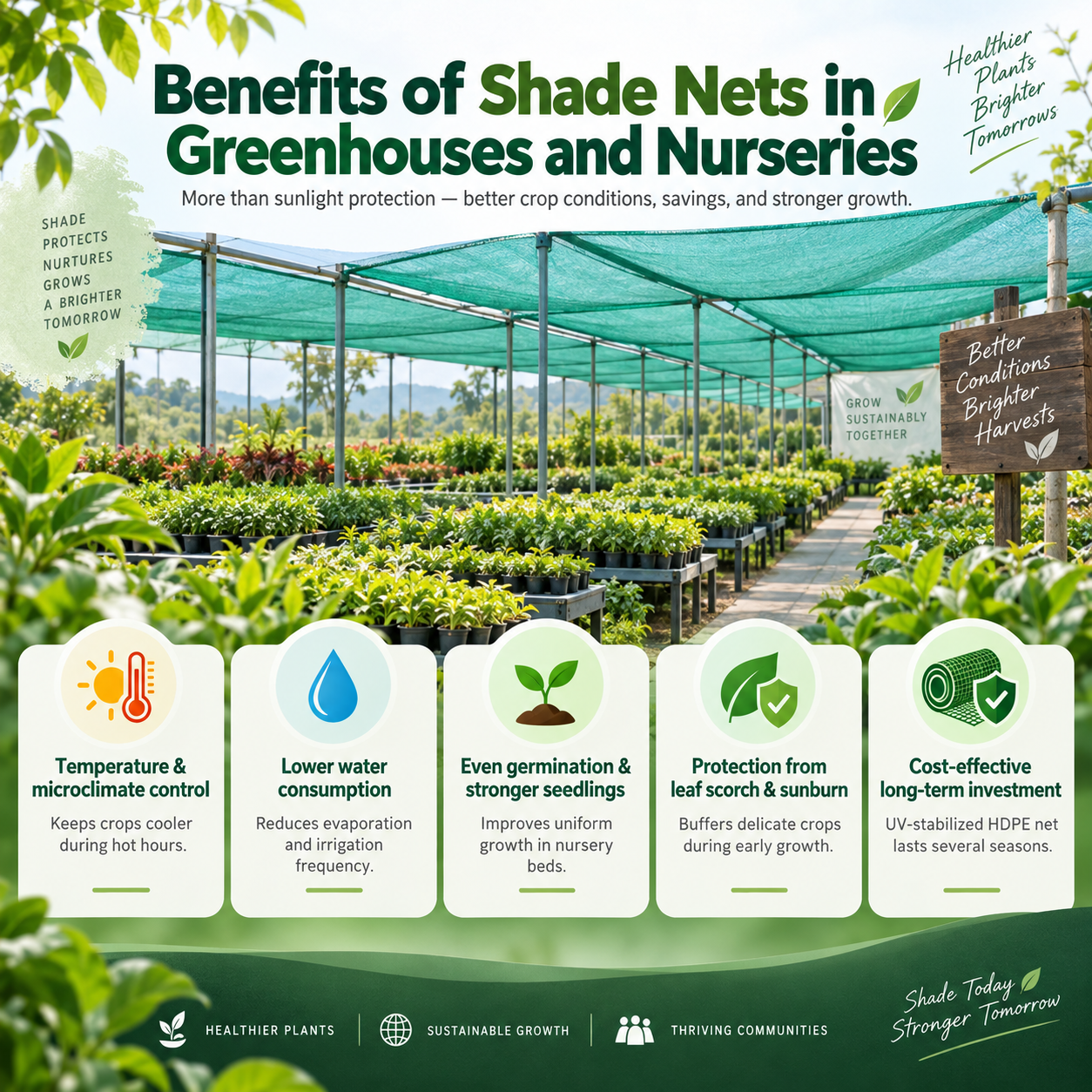
Temperature and microclimate control
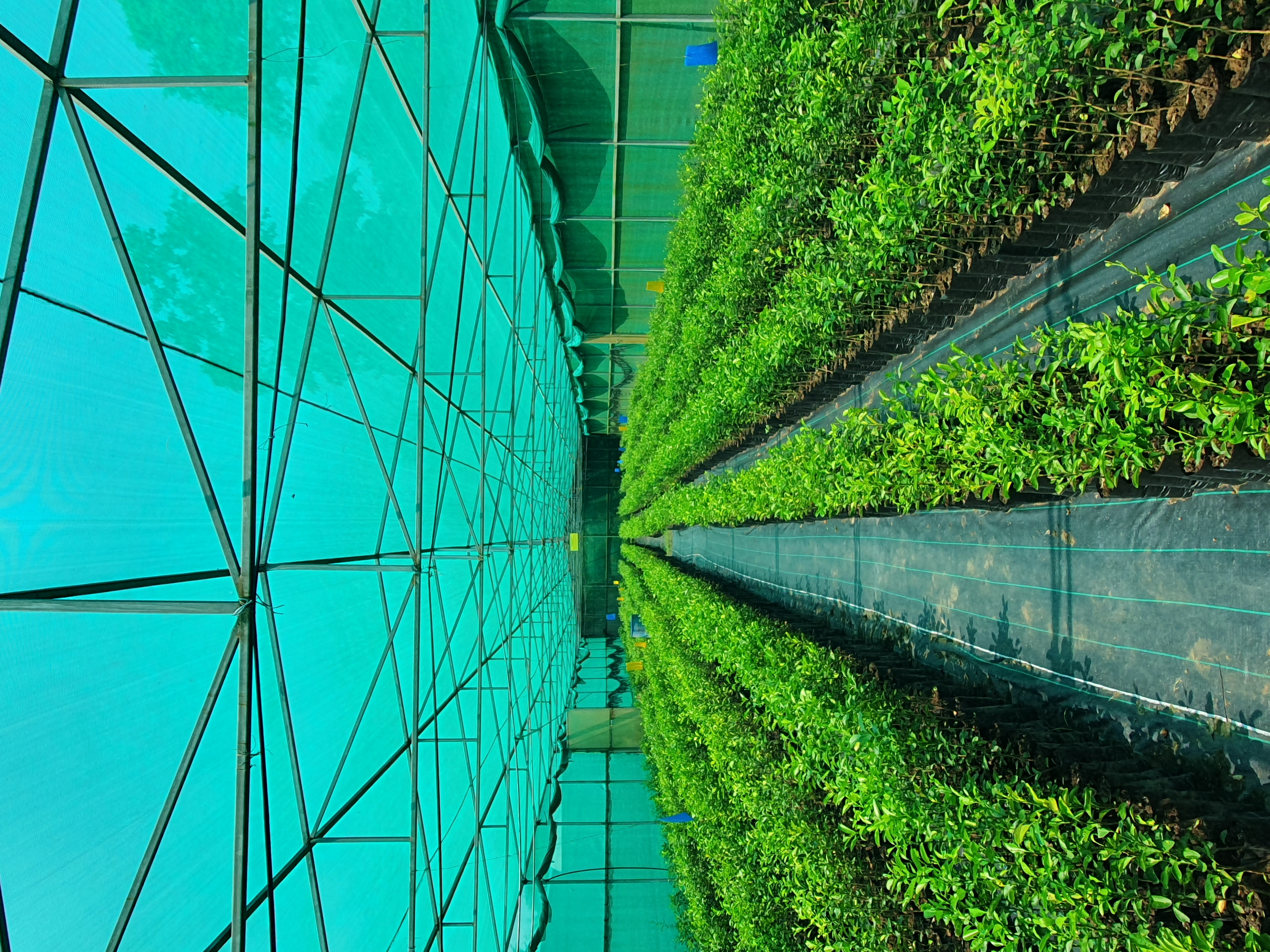
Direct sun raises greenhouse and net-house temperatures quickly, stressing plants and accelerating water loss from soil. A correctly specified shade net moderates the internal temperature, keeping conditions closer to the crop's ideal range through the hottest hours of the day.
Lower water consumption
By reducing direct solar load on the soil surface, shade nets slow evaporation, meaning nursery beds and greenhouse floors need less frequent irrigation — a meaningful saving over a full growing season.
More even germination and stronger seedlings
Nursery beds under shade net see more uniform soil temperature and moisture, which translates to more even germination rates and sturdier, less leggy seedlings ready for transplant.
Protection from leaf scorch and sunburn
Many nursery and greenhouse crops are especially vulnerable to leaf scorch and fruit sunburn during transplanting and early growth stages. Shade netting buffers this stress during the most delicate phase of the crop cycle.
A cost-effective long-term investment
A UV-stabilized HDPE shade net, correctly installed and maintained, typically performs for several growing seasons — making it one of the more cost-effective interventions a nursery or greenhouse operator can make.