Why shade percentage matters
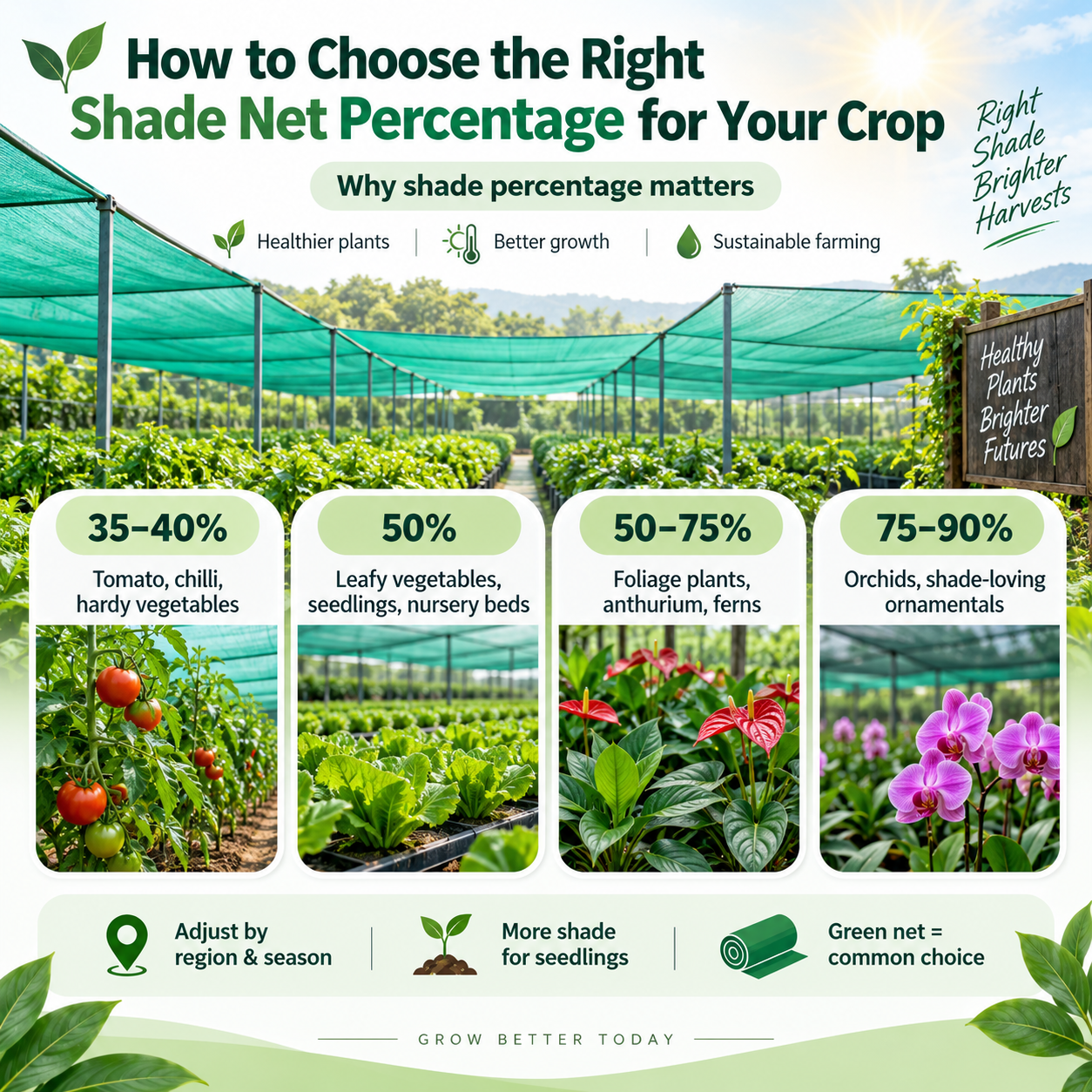
Shade net percentage tells you how much direct sunlight the net blocks — a 50% shade net cuts roughly half the incoming light, a 90% net blocks most of it. Choosing the wrong percentage is one of the most common and costly mistakes in protected cultivation: too little shade and heat-sensitive crops scorch, too much and light-hungry crops stretch, pale and under-yield.
Match shade % to crop type
As a starting reference for growers across Maharashtra and India:
- •35-40% shade — hardy vegetables, tomato, chilli and general nursery hardening
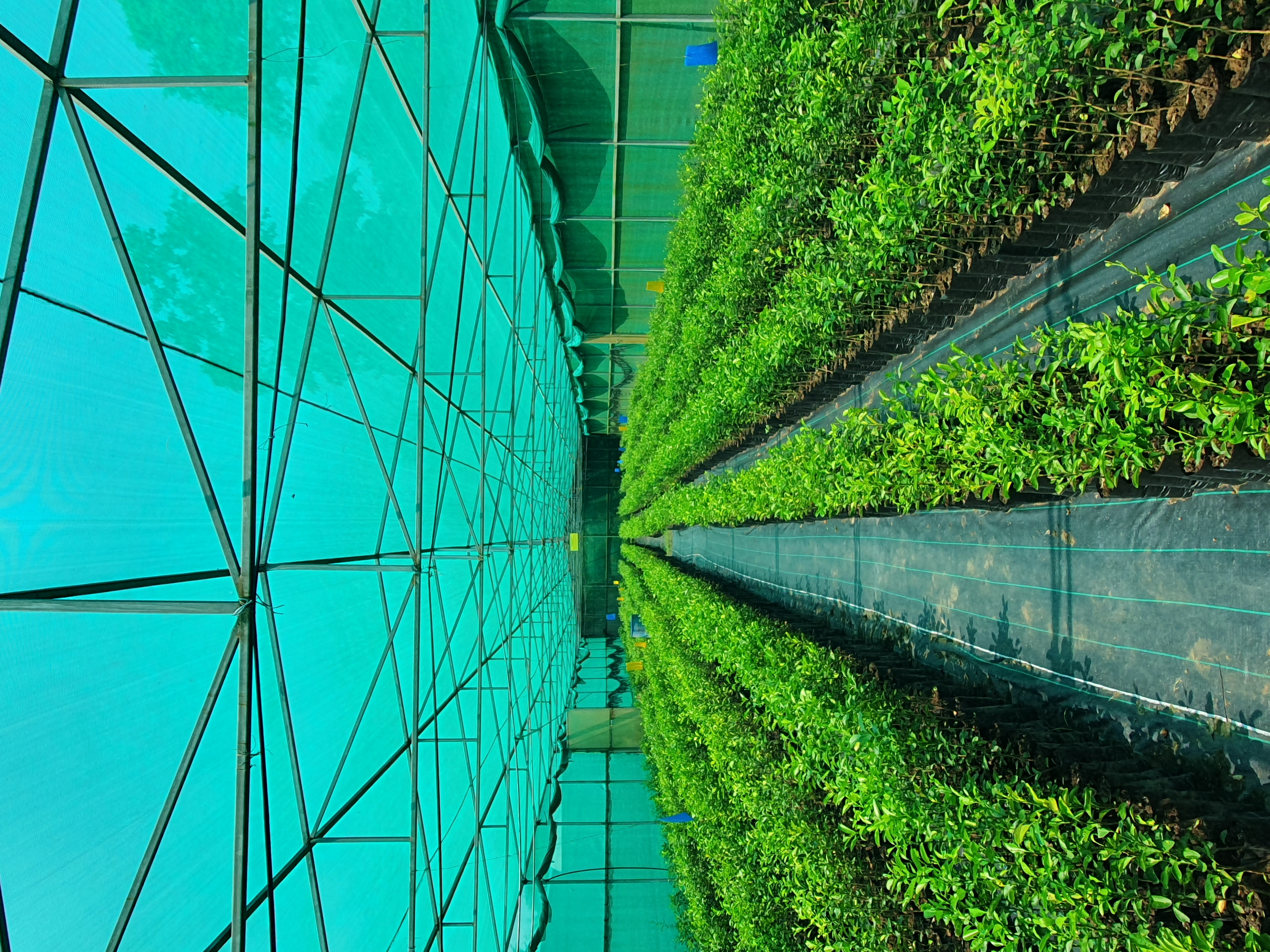
- •50% shade — leafy vegetables, seedling raising, general nursery beds
- •50-75% shade — ornamental foliage plants, anthurium, ferns
- •75-90% shade — orchids, shade-loving ornamentals, nursery mother-stock protection
Factor in region and season
Coastal and Konkan-belt growers dealing with intense summer sun often need a higher percentage than growers in cooler hill regions. Many nurseries in and around Navi Mumbai and greater Mumbai use 50% green shade net as an all-season default, stepping up to 75% during peak summer months for sensitive stock.
Consider crop growth stage
Young seedlings and freshly transplanted stock generally need more shade than mature, established plants. It's common practice to start nursery beds under 50-75% shade and gradually harden plants off under lighter shade or full sun before field transplanting.
Colour also plays a role
Green shade net is the most common choice for general horticulture as it diffuses light evenly. Black net offers slightly higher heat absorption and is often used for hardier crops and structures, while white or silver nets reflect more light and heat, suiting greenhouses in extreme summer conditions.