Why physical exclusion matters
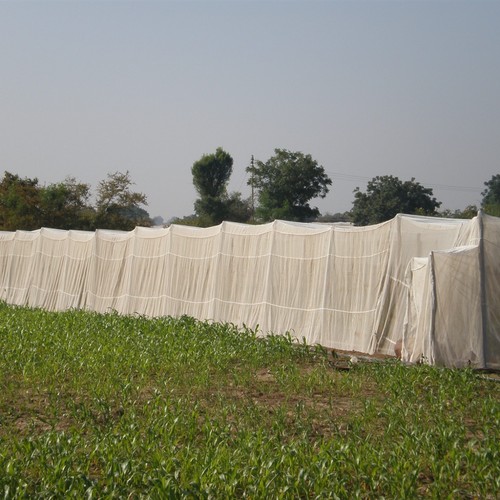
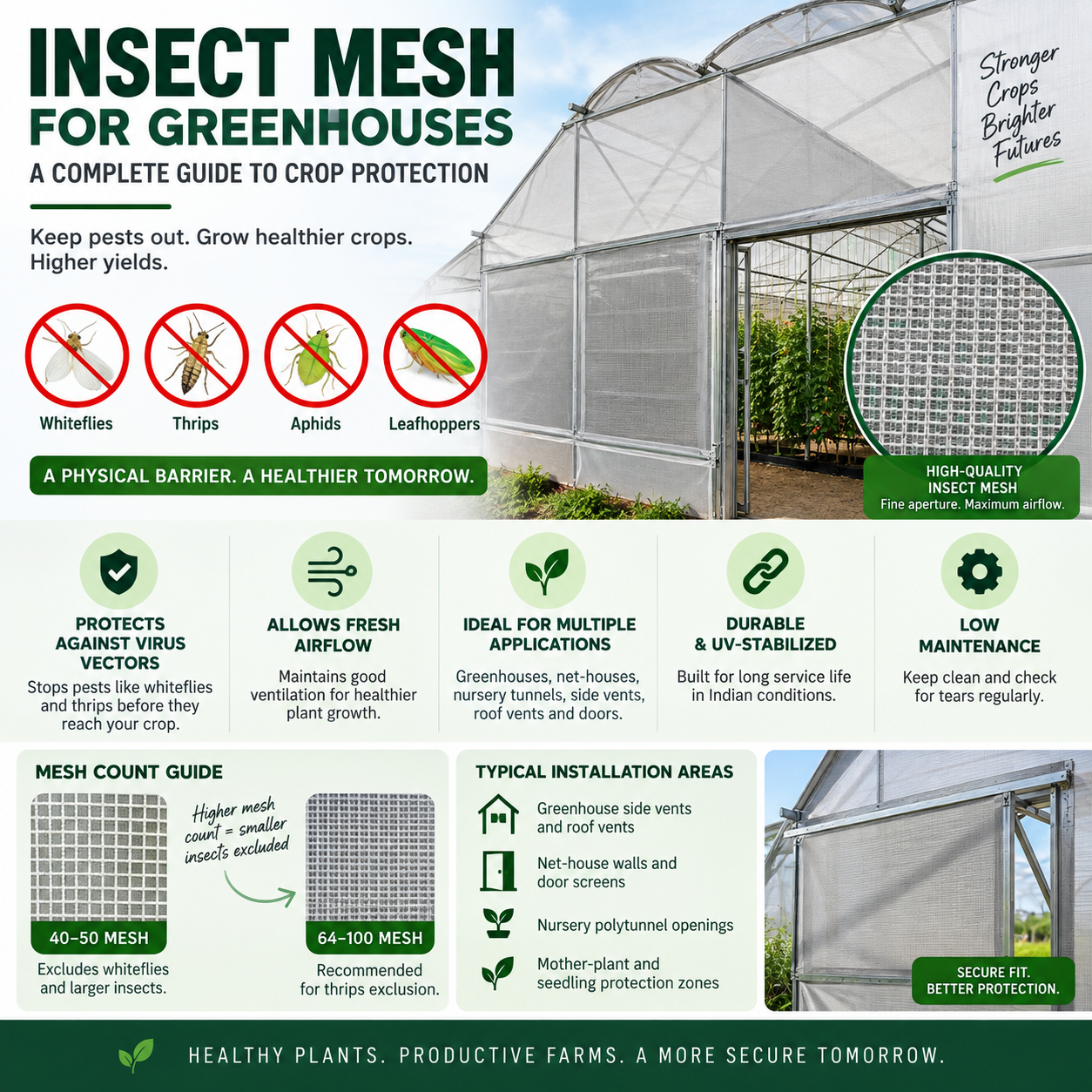
Many of the most damaging greenhouse crop losses come not from insects feeding directly, but from the viruses they transmit while feeding — whiteflies spreading leaf curl virus being a well-known example in Indian tomato and chilli cultivation. Insect mesh works as a physical barrier, stopping pests before they reach the crop, rather than reacting after an infestation.
Understanding mesh count
Mesh count refers to the number of threads per inch of fabric — the higher the count, the finer the aperture and the smaller the insect it can exclude. A 40-50 mesh count effectively excludes whiteflies and larger insects, while thrips exclusion typically calls for 64-100 mesh.
Balancing exclusion with ventilation
Finer mesh counts reduce airflow through the screen, which can raise internal greenhouse temperature and humidity if not accounted for in the ventilation design. A leno-weave construction, like the mesh B&V Agro manufactures, is engineered to hold its aperture shape and maximise open area for a given mesh count.
Where to install insect mesh
- •Greenhouse side vents and roof vents
- •Net-house walls and door screens
- •Nursery polytunnel openings
- •Mother-plant and seedling protection zones
Maintenance for long service life
Insect mesh should be kept free of dust build-up, which can restrict airflow over time, and checked periodically for small tears that could allow pest entry.