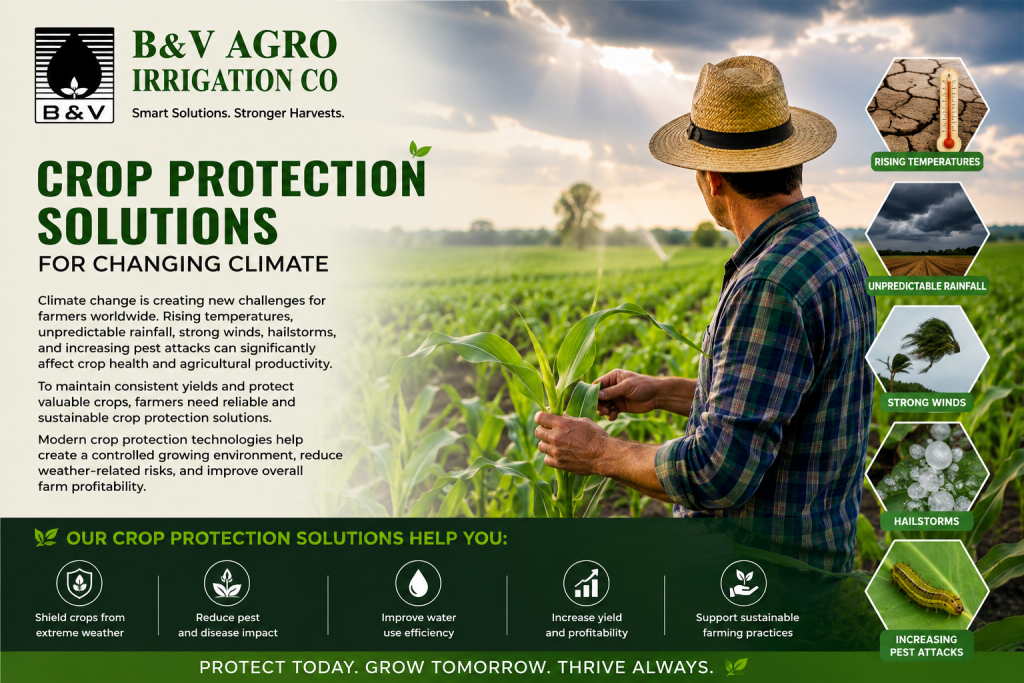
Climate change is creating new challenges for farmers worldwide. Rising temperatures, unpredictable rainfall, strong winds, hailstorms, and increasing pest attacks can significantly affect crop health and agricultural productivity. To maintain consistent yields and protect valuable crops, farmers need reliable and sustainable crop protection solutions.
Modern crop protection technologies help create a controlled growing environment, reduce weather-related risks, and improve overall farm profitability.
Why Crop Protection Is Important in a Changing Climate
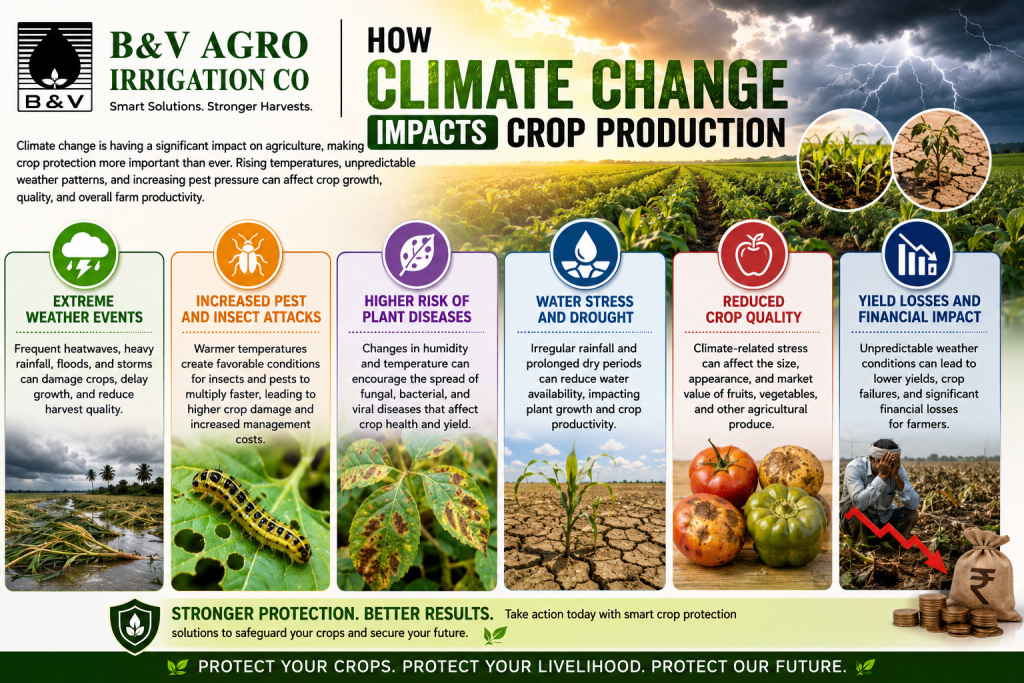
Changing weather patterns can expose crops to multiple threats, including:
- Extreme heat and sunlight
- Heavy rainfall and flooding
- Hailstorms and strong winds
- Insect and pest infestations
- Plant diseases
- Water stress and drought conditions
Effective crop protection solutions help farmers minimize these risks while ensuring healthy crop growth throughout the season.
Changing weather patterns can expose crops to multiple threats, including:
- Extreme heat and sunlight
- Heavy rainfall and flooding
- Hailstorms and strong winds
- Insect and pest infestations
- Plant diseases
- Water stress and drought conditions
Effective crop protection solutions help farmers minimize these risks while ensuring healthy crop growth throughout the season.
How Crop Protection Solutions Help
Modern crop protection systems help farmers adapt to changing climate conditions by providing:
- Protection from excessive heat and sunlight
- Defense against hailstorms and strong winds
- Barriers against harmful insects and pests
- Improved growing conditions for crops
- Reduced crop losses and higher productivity
- Better crop quality and market value
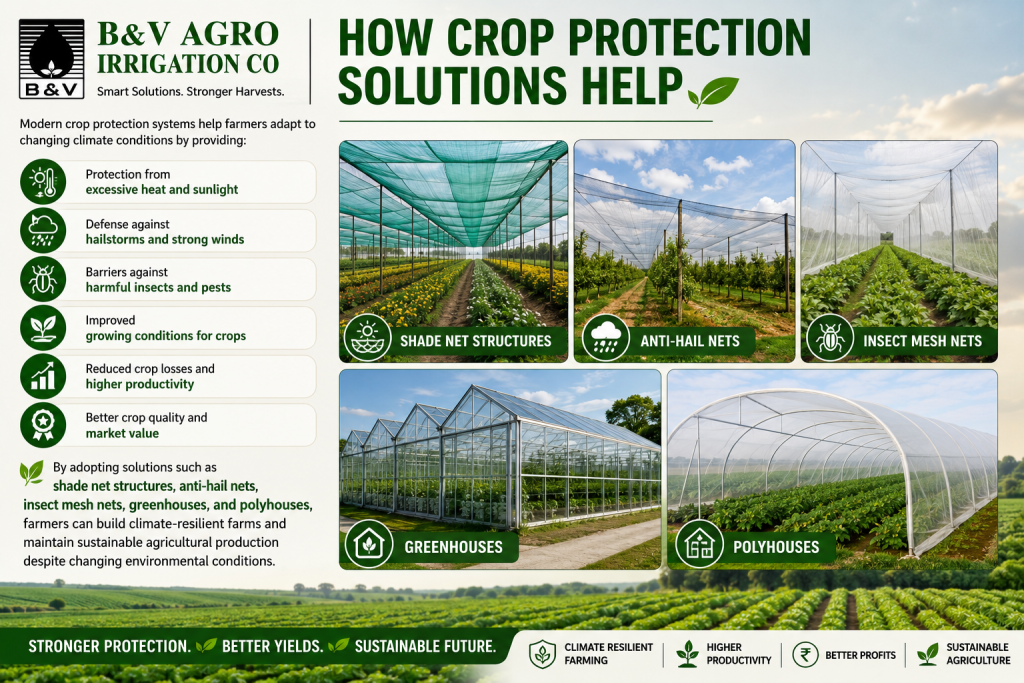
By adopting solutions such as shade net structures, anti-hail nets, insect mesh nets, greenhouses, and polyhouses, farmers can build climate-resilient farms and maintain sustainable agricultural production despite changing environmental conditions.
Conclusion
Climate change continues to create new challenges for agriculture, from extreme weather events and pest infestations to water stress and crop diseases. These factors can significantly affect crop productivity, quality, and farm profitability. Implementing effective crop protection solutions such as shade net structures, anti-hail nets, insect mesh nets, and protected cultivation systems helps farmers reduce risks and maintain consistent production. By investing in climate-smart crop protection strategies, farmers can safeguard their crops, improve yields, enhance produce quality, and build a more sustainable and resilient agricultural future.