Every farmer wants the same thing: healthy crops and better yield. But in reality, crops face many challenges extreme heat, unpredictable weather, pests, and water stress. This is where shade nets make a real difference.
Shade nets don’t just block sunlight. When used correctly, they create a balanced growing environment that helps crops grow stronger, healthier, and more consistently. Let’s understand how shade nets actually improve crop yield in a practical, down-to-earth way.
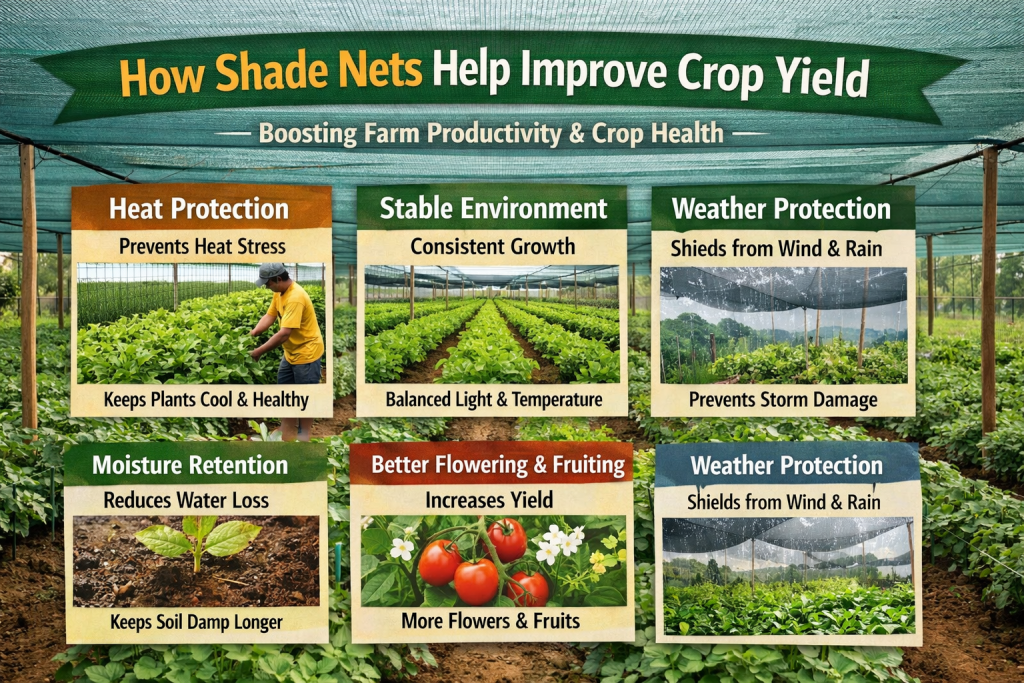
1. Protect Crops from Excessive Heat
Too much heat can slow down plant growth, burn leaves, and reduce flowering and fruiting. Shade nets filter sunlight and reduce temperature around the crop. This prevents heat stress and allows plants to focus their energy on growth rather than survival.
2. Create a Stable Growing Environment
Open-field farming depends heavily on weather, which can change suddenly. Shade nets help create a more stable environment by controlling sunlight, temperature, and airflow. When plants grow under steady conditions, they grow more evenly and produce better yields.
3. Reduce Water Loss and Improve Moisture Retention
Direct sunlight and strong wind cause soil moisture to evaporate quickly. Shade nets reduce evaporation, keeping the soil moist for a longer time. This means crops get consistent water, irrigation frequency reduces, and plants stay stress-free.
4. Improve Flowering and Fruit Setting
Many crops drop flowers or fruits due to heat stress. Shade nets help maintain a comfortable temperature, which improves pollination, flowering, and fruit setting. As a result, farmers get more fruits per plant and higher overall yield.
5. Protect Crops from Wind and Heavy Rain
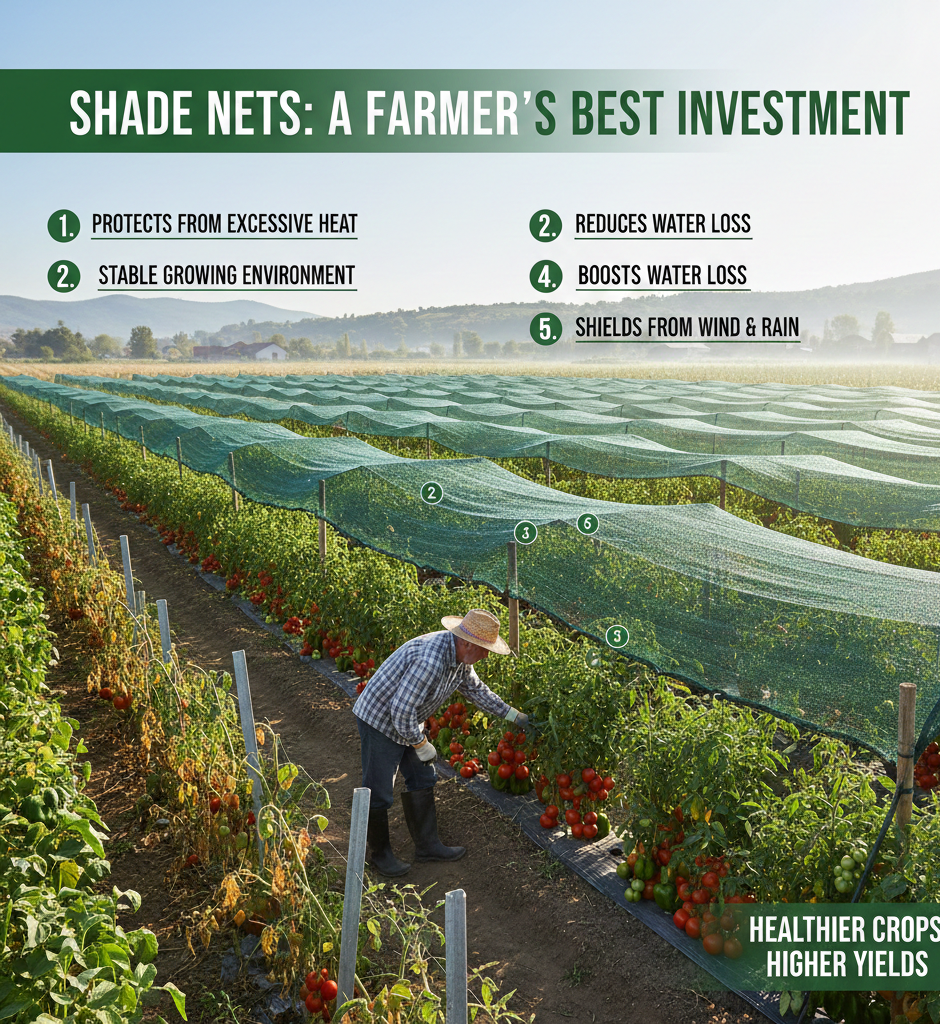
Strong winds can break plants, while heavy rain can damage leaves and flowers. Shade nets act as a protective layer, reducing the impact of harsh weather. Crops remain physically strong and suffer fewer losses.
Final Thoughts
Shade nets are a smart investment for farmers who want consistent and better yields. They don’t replace good farming practices, but they support them by creating the right environment for crops to grow.
With proper shade net selection and management, farmers can protect their crops, reduce stress, and harvest healthier, higher-yielding produce season after season.